
Way Out #15: From Startup Toxicity to Building a Balanced Life with Anna Duin
There’s a sentence Anna Duin said near the end of our conversation that I keep coming back to.
She was talking about what it’s like to do the same work, with the same skill set, as both a salaried employee and a freelancer, and how differently people treat you depending on which one you are.
“When you’re the contractor, you get to be the hero.”

As Anna explains, when you are a salaried employee, you inevitably get taken for granted, much like being in a long-term relationship. But the minute you become an outsider charging a premium, the perception completely shifts.
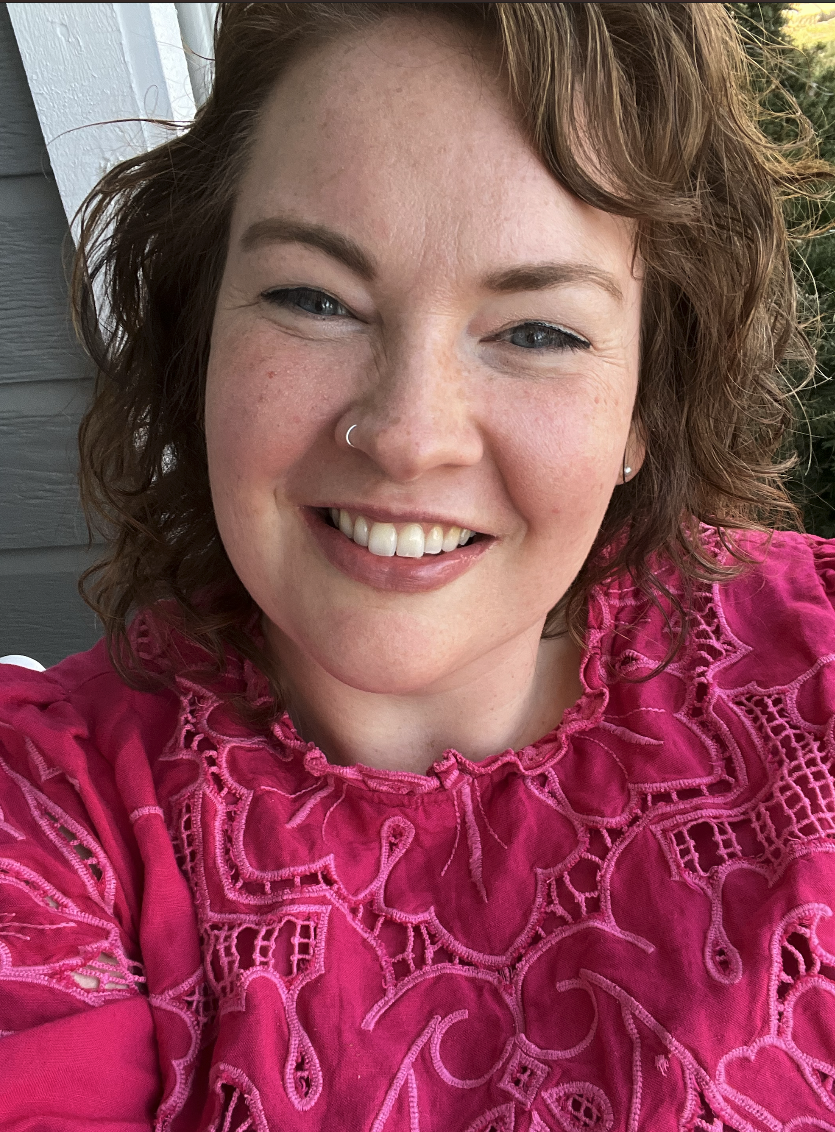
Anna Duin is a freelance marketing consultant in Kansas City. She does lead generation, email marketing, and HubSpot support. She’s been freelancing for just over a year. Before that, she spent 11 years doing marketing at startups.
After stalling out at the individual contributor level and surviving endless rounds of layoffs, she realized it was time to build her own thing.
She’s still figuring it out. But she’s figuring it out on her own terms. And so far, it’s working!
A Childhood Without the Standard Rules
If you want to understand how Anna Duin was eventually able to walk away from the corporate safety net, you have to look at how she grew up.
She was born in Stockholm, Sweden, to missionary parents. She traveled constantly, moving from place to place, before her family permanently settled in the Kansas City area when she was eight years old. She was homeschooled by parents she lovingly describes as "alternate lifestyle people" who never worked standard nine-to-five jobs.
Instead, she grew up watching people figure out their own paths. Her father always had robust side hustles, even going to electrical engineering school to learn new skills so he could make extra money when times were lean. Her parents later pivoted entirely, reinventing themselves as pastoral and specialized counselors.
But the most defining lessons came from her mother. Her mom was a feminist who didn't care about conventional expectations. She never told Anna that she should wear makeup or look a certain way. Instead, she taught Anna to ask, “Does it matter? Is it meaningful for me? Does it align with my faith? Does it align with my values?”
Her mother instilled a philosophy in her that she still carries today: Society has a lot fewer rules than we think. You don't have to follow the standard path.
“She was always saying to me, your biggest thing is your time and your freedom. If you can craft a life that aligns with your value, aligns with your personal mission and meaning, and gives you time and freedom, that is a successful life.”
It took Anna a few years in the corporate grind to fully remember that lesson. But once she did, it changed everything.
The Psychology Major Who Stumbled Into Marketing
Anna went to school for psychology. The plan was to become a therapist. Then, in her senior year, she had a moment of clarity: “I have no patience to sit and listen. I’m extremely bossy and opinionated. I don’t think therapy is the right gig for me.”
On a whim, she started taking entrepreneurship classes. She fell in love with them, and she ended up at a string of startups. Some exciting, some chaotic, all of them with the same basic math: we want you to do three jobs for the price of one.
She negotiated flexible hours when she could. In three of her positions, she worked roughly 30 hours a week. She says it was a conscious trade-off because she refused to see her kids only during the frantic, grumpy hours before bedtime. But it came with a cost. She stalled out at the individual contributor level. She said she was given the responsibility of someone two levels above her without the title or the pay.
“I kept seeing all these contractors I worked with make way more money than me,” she told me. “And I thought: if they can do it, maybe I can do it too”.
The Years She Doesn’t Know How She Got Through
When Anna’s youngest son was born, things got scary quickly. The NICU. A deaf diagnosis. Potential neurological issues. Genetic counseling. They had up to ten doctors at one point. For two years, she navigated the kind of uncertainty that makes everything else feel small.
She was doing all of that while working at a startup going through layoffs. They were changing her job description every few months, setting her up to master specializations she’d never been trained in, and blaming her when it didn’t work.
“I honestly don’t know how I did that,” she said.
She stayed about six months longer than she should have. Everyone around her could see she was miserable. Then, while hounding a recruiter for job leads during a self-proclaimed "life crisis," she heard herself say the thing she’d been almost-saying for years: “I guess I have to build my own thing now.”
The recruiter said: Yeah. I think so too.
What She Got Wrong First
Anna was non-referable.
That’s the exact word she uses for it. She told everyone she did marketing, and the problem with that, she discovered, is that people can’t refer what they can’t picture.
“Even fellow freelancers would say: I love you, but I have no idea what to send your way”.
The shift came when she got specific. Instead of “marketing,” she started saying: I do HubSpot. I do email. I do lead generation. I help sales teams stop spending hours on tedious tasks.
The response was immediate. People started thinking of her for actual projects. One referral partner alone sent her five leads, three of which closed. The moment the language became specific, the whole system started working differently.
She realized a hard truth: as a freelancer, you are either a specialist that people seek out, or you are a commodity competing on price.
“If I just say I do marketing, why are you better than anybody else who does marketing? Then the client's just going to go with the lowest-bidding person. I don't just do marketing. I help people, I help their sales team work efficiently and scale without hiring more people. I help them stop spending hours on tedious tasks."
The Art of Asking Better Questions
Anna worked as a Starbucks barista for five years during college. She did it because she needed the money, but what she didn’t realize until much later was that she was building one of her most valuable professional skills.
When you make a thousand coffees a day and ask people, “How are you?” you get a thousand variations of fine, good, busy. At some point, you stop asking that. You start asking: What’s the most interesting meal you’ve ever had? What did you want to be when you were five? What’s your dream vacation?
And you get something completely different. The questions you bring to a conversation will totally change the outcome.
She uses it with clients now. Instead of asking, “What do you need done?” she asks: What’s the hardest part of your work week right now? Where are you spending hours you don’t want to be? Do you want me to take the first draft, or do you want me to walk you through how to do it yourself?
She uses it in networking, too. She researches every person before a coffee meeting: their website, their LinkedIn, their past work. She finds something specific to be curious about.
“By the time we chat, I have specific [questions], like, hey, I love how you do this part of your pricing model, you know, what led you to this point? How has it worked?... and then I get very interesting insights.”
The Retainer Pivot
About a year into entrepreneurship, Anna landed her first indefinite retainer client. She took a 25% pay cut to do it.
To anyone on the outside, that sounds like a terrible business move. But Anna will tell you it was one of the smartest decisions she made. “It was work I didn't have to continually win over and over... It's a totally different situation."
The math of freelancing looks simple until you account for everything you don’t bill. The proposals that don’t close. The emails at 10 p.m. The mental load of tracking six projects, three prospects, and suddenly remembering you forgot to send an invoice.
“When I first was like, how much do I need to make? I did the math well. But what I didn't calculate was how much time you will just spend checking your emails, writing proposals, following up on a prospect, just mental task switching.”
The retainer solved the one thing project work never could: predictability. Even at a lower hourly rate, having a financial baseline she could count on made the chaos of everything else manageable.
On Being the Hero
Anna’s sister has been self-employed for years. Her parents were, too, in their own way. Anna grew up watching people figure out alternative paths.
It was her sister who gave her the ultimate piece of perspective: When you’re the contractor, you get to be the hero.
As a salaried employee, especially one who is self-deprecating and reluctant to take full credit or toot her own horn, you become invisible. You get taken for granted, the exact same way you do in a long-term relationship.
But as a contractor, you walk in from the outside. You are someone who was explicitly chosen. Your perspective carries weight precisely because you aren't entangled in internal politics.
“I can do the same different job and the same different skillset and be perceived in wildly different ways by three different clients. And that's not a reflection of me... It's about them, not about you. And like, I wish I had realized that a little bit sooner.”
This realization tied back to something she had read that resonated: one of the lesser-known symptoms of burnout is actually imposter syndrome. In a toxic corporate environment, you are conditioned to believe you are constantly getting it wrong, when in reality, you haven't lost your edge. You've just been made someone’s scapegoat.
What She’s Building Toward
Anna wants to work about 20 hours a week. She wants six months of work teed up at a time. She wants to go deeper in her niche. She’s still a bit of a generalist, figuring out exactly where to plant her flag. She wants to do pro bono work for businesses she loves. She wants to mentor, launch a Substack, do public speaking, and write more.
She recommends The Plan by Kendra Adachi to anyone trying to get organized without the hustle-culture guilt, noting that most traditional productivity advice is written by "rich white men" who aren't carrying the mental load of running a household. She also recommends Ashlyn Carter’s YouTube channel for an honest look at what a founder’s workweek actually looks like, including the part where she admits to planning for only about four hours of solid work a day, four days a week, and has still made over a million dollars.
Most of all, Anna wants to get out of the low-grade fight-or-flight mode she’d been in for years, navigating the toxic startups, the medical crises, the layoffs, and the guilt, and get to the part where she’s actually present.
She’s getting there.
Anna’s Advice for Wayfinders
At the end of every episode, I ask my guests what they’d tell someone still trying to figure out what to do with their life. Here’s what Anna said:
Talk to Everyone Who’s Done It Before You
Before she quit, Anna had coffee with every freelancer she knew. She asked about their first year, pricing, lead sources, and loneliest moments. It set realistic expectations in a way nothing else could have. “Basically, they all tell me the first year is really hard, the first year is really slow, and then it starts to like take off from there.” Find the people who are one or two years ahead of you. Connect with peers who are in it with you, so you have someone to spiral with, and people further ahead to give you a hand up. Let their experience shorten your learning curve.Get Clear Before You Go
Don’t leave and then try to figure out who you are. Start getting specific about your niche while you still have a salary. What’s the exact problem you solve? What tool, outcome, or industry can you name so clearly that someone goes: Oh, I know exactly who needs you? The clearer you are before you leave, the faster things move after. Start teeing up work before you’re officially out, and let people know what’s coming.Plan for a Slow First Year, and Give Yourself Permission to Be Surprised
Set a financial baseline that assumes the first year is lean. If you’re not in panic mode about money, you make better decisions about which clients to take, which to pass on, and how to price yourself. “Just plan on a slow first year financially,” she advised. “And if you’re pleasantly surprised, fantastic.” When the good months start coming, and you realize the tide is actually turning, you will be in a position to receive it.
Follow Anna
LinkedIn: Anna Duin
This post is part of the 101 Ways Out series: stories of people who found the courage to exit the status quo and build a life of purpose, freedom, and joy.
