
Childhood Without Boxes—and the Shock of Conformity
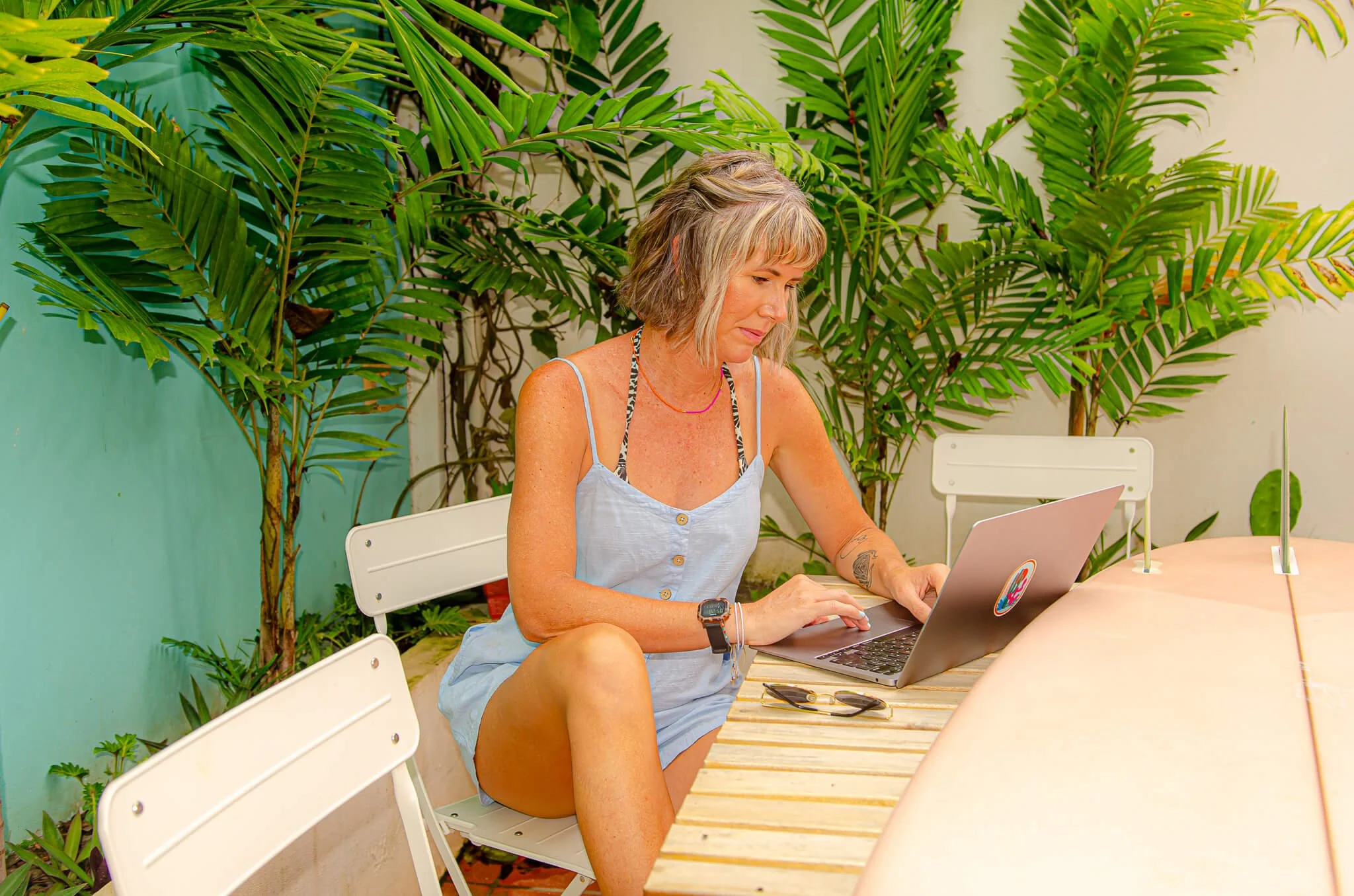
Growing up in Florida with two educators for parents—her dad a therapist and educator, her mom a speech therapist and educator—Hannah Brotherton didn’t realize her childhood was unconventional until she entered public school in eighth grade. She was homeschooled alongside a tight-knit community of families who celebrated annual "lantern walks" in the woods and learned through integrated, hands-on projects rather than competitive assignments. Hannah grew up ungraded and uncompared.
When her family moved to California and she stepped into a traditional classroom for the first time at 13, the contrast was jarring. Suddenly, kids were sorted into hierarchies of "smart" and "not smart," and learning meant sitting still for hours before earning the "reward" of moving your body. When her high school tried to replace her afternoon horseback riding and training schedule with a mandatory two-hour bowling class in tenth grade, Hannah opted out entirely—earning her GED at 15 and her associate’s degree from community college by 18.
"The system in which we were shown how to be successful made everything so your body is still and you're not moving, and you do that for a long time. And then after all those things are done—and if you do all those things well—then your body gets a reward. It's so hard to unwind."
Medical Bankruptcy, Grief, and Grit
At 18, armed with two years of college already under her belt, Hannah set out to see the world, living in Hawaii and Costa Rica before settling in Washington State. That freedom came to an abrupt halt at 20 when her mother was diagnosed with aggressive breast cancer. Hannah moved back to California for two years to care for her mom through chemotherapy, radiation, and surgeries. While an experimental drug trial ultimately saved her mother’s life, the cost of treatment bankrupted her parents and wiped out Hannah’s college fund.
Determined to finish her degree without a financial safety net, Hannah enrolled at the San Francisco Art Institute as a mixed-media sculpture major. After the first semester, she learned about her college fund being wiped out and that she owed $40,000. Taking out student loans to cover the shock, she left the private art school and stayed in San Francisco to work as a teaching assistant for children with autism. That experience inspired her to change her major to art therapy—and when California state budget cuts eliminated her financial aid, she moved to Lake Tahoe for a year to qualify for in-state tuition at the University of Nevada, Reno. She hit it off with her neighbor, who would later become her husband.
Once enrolled, she treated her degree like a sprint, taking heavy course loads straight through winter and summer sessions to finish in under 18 months. She pulled it off while working full-time, building furniture on the side to pay rent, and grieving the sudden death of her father from a heart attack at the end of her very first semester.
"I was paying for rent, paying for school, working full-time. I needed to knock this out as effectively as possible... My dad passed away of a heart attack, and so obviously very world-changing, but school and life had to be finished."
Spontaneous Detours and Accidental Operations
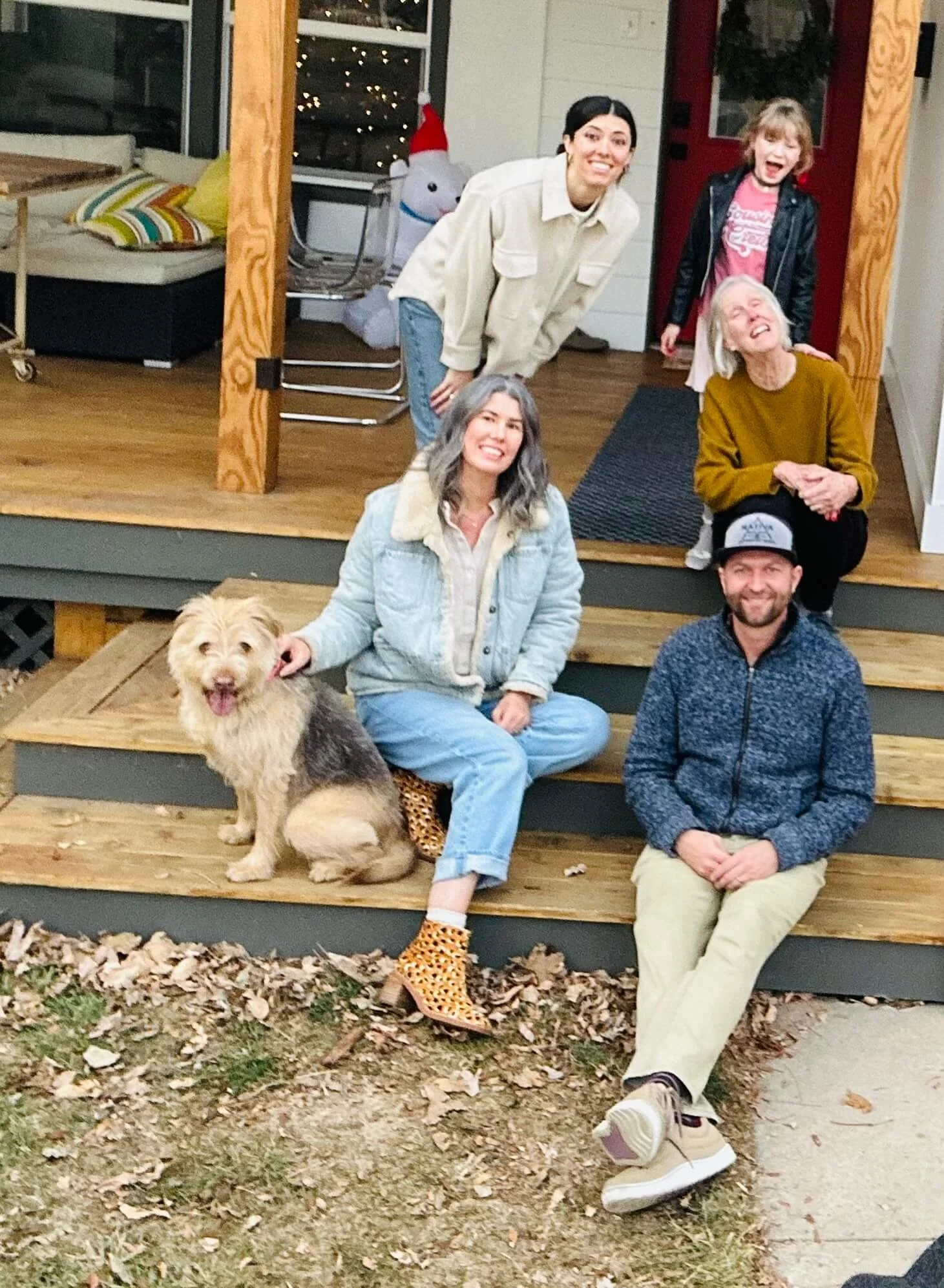
After graduating with an art therapy degree and zero certainty about what came next, Hannah and her now-husband set off on a spontaneous road trip to visit friends in the quirky border town of Bisbee, Arizona. Drawn in by a particularly good sunset—and with their friends helping her husband land a job at a local national monument while Hannah took a role at the town's high school—they impulsively decided to stay.
Just nine months later, however, concerns over toxic soil from Bisbee’s mining history—combined with a friend's offer to help run an arborist business—pulled them north to Denver, where they stayed for the next decade.
Realizing traditional school-based art therapy felt too forced for kids, Hannah nannied while indulging an obsession with how physical products and spaces are designed. That curiosity led her to an aunt's partner who worked in product design—and soon she was advising a European outdoor brand on how to fix its manufacturing inefficiencies. When they asked if she wanted to run operations, she had to Google what the word meant before enthusiastically saying yes. Overnight, she taught herself global supply chain logistics, tariffs, importing, and retail merchandising, working alongside Patagonia veterans to launch the brand’s first U.S. brick-and-mortar stores.
After a layoff when the brand pulled out of the U.S., Hannah jumped into direct-to-consumer operations at a U.S. sticker manufacturing company. When COVID hit and domestic supply chains exploded, she found herself scaling a customer success team from four to 25 people in just 18 months while parenting a toddler at home. Under the mentorship of a CEO who championed human-centered leadership, Hannah realized she had a rare gift: walking into operational chaos and building calm, scalable systems around real human needs.
The "Creepy Crawly" Feeling and the Birthday Reconnaissance Trip
On paper, Hannah had built the exact life she was supposed to want: a remote leadership role at a great SaaS startup, a husband in his dream conservation job in Boulder, a home in Colorado, and even her extended family relocating nearby to help raise her daughter, Elspeth. Internally, however, a persistent, "creepy crawly" restlessness wouldn't go away.
"I did all the things—I got married, I had a kid, now I have this amazing job. And also, I feel like there's this part of me that still wants to exist, and I don't know how totally to do that."
She took a trial run, spending six weeks living in Costa Rica with her family while working remotely. That experience gave her a taste of a slower, more expansive family rhythm, prompting Hannah to quietly research a move to Mexico. With friends who owned a home in the area, she planned a birthday trip—inviting her husband and brother on what they assumed was just a relaxing beach vacation. Despite the not-so-subtle hints she had been dropping, her husband wasn't really paying attention—until day five, when she casually walked him onto the campus of a local school to tour it for their daughter.
The Breaking Point: "I Have to Leave, and I’m Taking My Child"
While her husband—whom she affectionately calls her "anchor"—was happy staying put in Colorado, Hannah reached a point where staying in the U.S. felt impossible. Between the relentless grind of American working parenthood—zero maternity support, rushed mornings, and exhausted evenings—and the pervasive threat of school gun violence, the emotional toll became unbearable.
"Being a parent in the US is so hard. It's just like, 'You should have a kid,' but also you get zero support and no mat leave. And also we're going to make it so both of you have to work, and then you have to send your kid to daycare, and then you're going to both get home super late. Everyone's tired, everyone's hungry, and you better cook a dinner or you just eat cereal, and then you go to bed, and then you stress because you have to wake up and do the freaking thing all over again. This sucks. If this is the dream, if this is ‘winning,’ I want to lose. I don't want to do this. This is shitty."
For Hannah, the turning point wasn’t a single headline—it was a slow, accumulating realization that raising a child in the U.S. required normalizing things she could no longer stomach. Even when choosing early daycares, she caught herself feeling grateful that a home-based center didn't look like a school from the outside, or rejecting an otherwise wonderful downtown program because the playground felt too exposed—positioning the kids "like sitting ducks". That quiet vigilance only deepened during a hike when two recent high school graduates casually mentioned that COVID lockdowns had been a relief because, for the first time, they weren't scared at school every day.
The fear hit home when an active shooter situation locked down an elementary school right in her neighborhood—a school attended by her friend’s child. To shield the young students from the truth, adults told them a wild animal was on the loose, leaving the kids terrified to play outside for months. For Hannah, being forced to lie to children about the reality of their world felt just as untenable as the danger itself.
When her own daughter started public kindergarten for six months before their move, Hannah attended a school safety protocol meeting where the principal calmly walked parents through phone trees and emergency lockdown procedures. Looking around, Hannah realized she was the only parent in the room weeping. She was struck by how everyone else had managed to compartmentalize and normalize an unthinkable reality.
She watched friends snap daily photos of their kids before drop-off “just in case,” and saw her sensitive, high-energy daughter begin to shrink inside rigid classroom expectations. Hannah realized she couldn't keep sending her child into an environment defined by unspoken anxiety—nor could she watch her daughter’s spirit get flattened in order to fit a narrow mold of "success".
"I can't tell her every day when I send her to school... I have friends that take pictures of their kids so they know what they look like. I just can't do it. If this kid grows up in this environment, she's going to get squished. She will be perfect, she will be beautiful, she will be successful, and she will be empty... There's literally no other choice. We have to leave, and I'm taking my child."
Risking the Marriage, Sleeping on the Floor, and Building on the Fly
Making the decision to leave the U.S. meant confronting a terrifying reality: her husband wasn't on board. Having just finished grad school and landed his dream conservation job with the city of Boulder, he had a clear, linear career path—and zero desire to blow it up. Even when Hannah booked flights, secured a house, and took him to the Mexican consulate, he stayed in selective denial until two months before departure, when she finally asked if he was going to put in his notice.
For Hannah, the conviction to protect her daughter’s childhood had become non-negotiable—even if it meant risking her marriage. She knew that if she stayed, she would spend the rest of her life resenting the choice. Ultimately, her husband decided to leap with her, quitting his dream job to become a stay-at-home dad in a country he had never planned to live in.
Meanwhile, the logistics of leaving accelerated faster than planned. When Hannah’s SaaS employer suddenly banned employees from working outside the U.S., her hopes for a gradual transition vanished, forcing her to quit and turn a four-month-old side consulting gig into a full-time S-Corp overnight. Around the same time, she listed their Colorado house on Airbnb just to "test the waters." Within hours, the calendar booked solid—leaving her family homeless months ahead of schedule and sleeping on her mother's floor while Hannah scrambled to learn invoicing, contracts, and business taxes from scratch.
They landed in a small Mexican beach town with a two-month rental secured. Hannah was running on adrenaline. As the sole breadwinner while her husband navigated his own identity shift from career conservationist to full-time dad, she spent her first year in "pedal to the metal" survival mode—taking every client she could get to build a financial cushion. It wasn't until burnout hit that she realized the hardest part of her leap wasn't leaving the U.S.—it was untangling herself from her own addiction to pressure.
"What does not being insanely busy look like? How do I survive that? Who am I without all this pressure?"
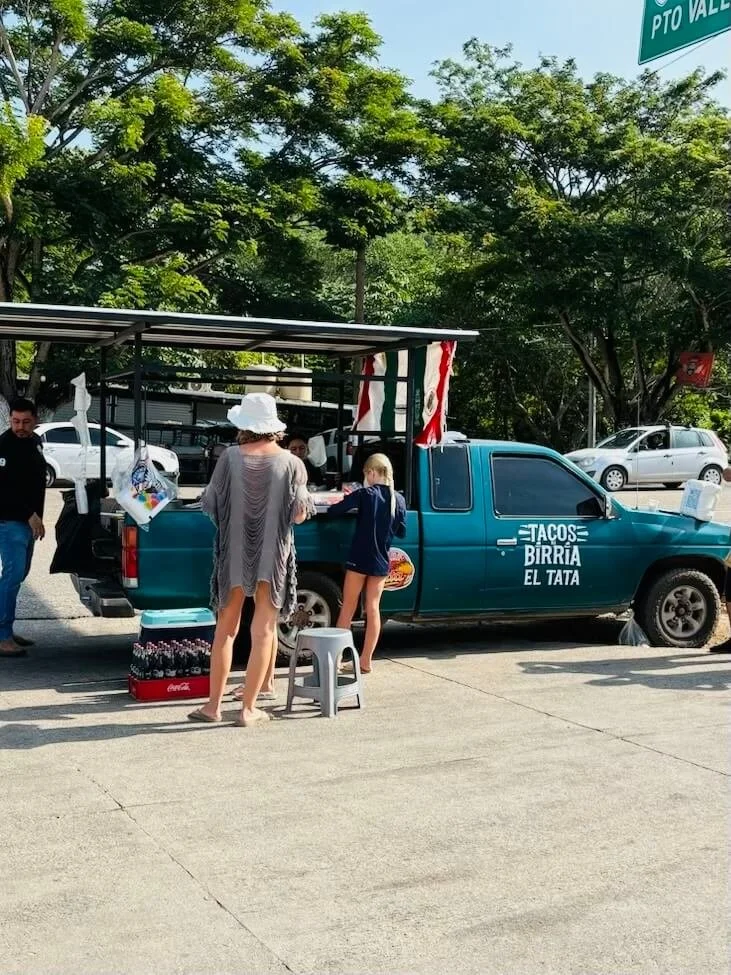
Two years in, Hannah is intentionally slowing down—instituting an annual month-long holiday pause from December 15 to January 15 and learning to savor the life she built. Her daughter now attends a bilingual school in the jungle, coming home dirty, ravenous, and singing in Spanish. Her husband surfs during the day and cooks dinner. Instead of scheduling playdates three weeks in advance over text chains, their evenings unfold spontaneously in the town plaza and on the beach at sunset. Hannah shares her thoughts on her daughter’s transformation:
"Seeing her, it felt like within the first eight months to a year of us being here, she went from being this very tight flower and all of a sudden she just opened up. And her body moved totally differently. Her voice sounded different. It sounded more like the voice I remember. It was just like, 'There you are. Okay, cool. This is the environment you were meant to exist in."
Where They Are Now
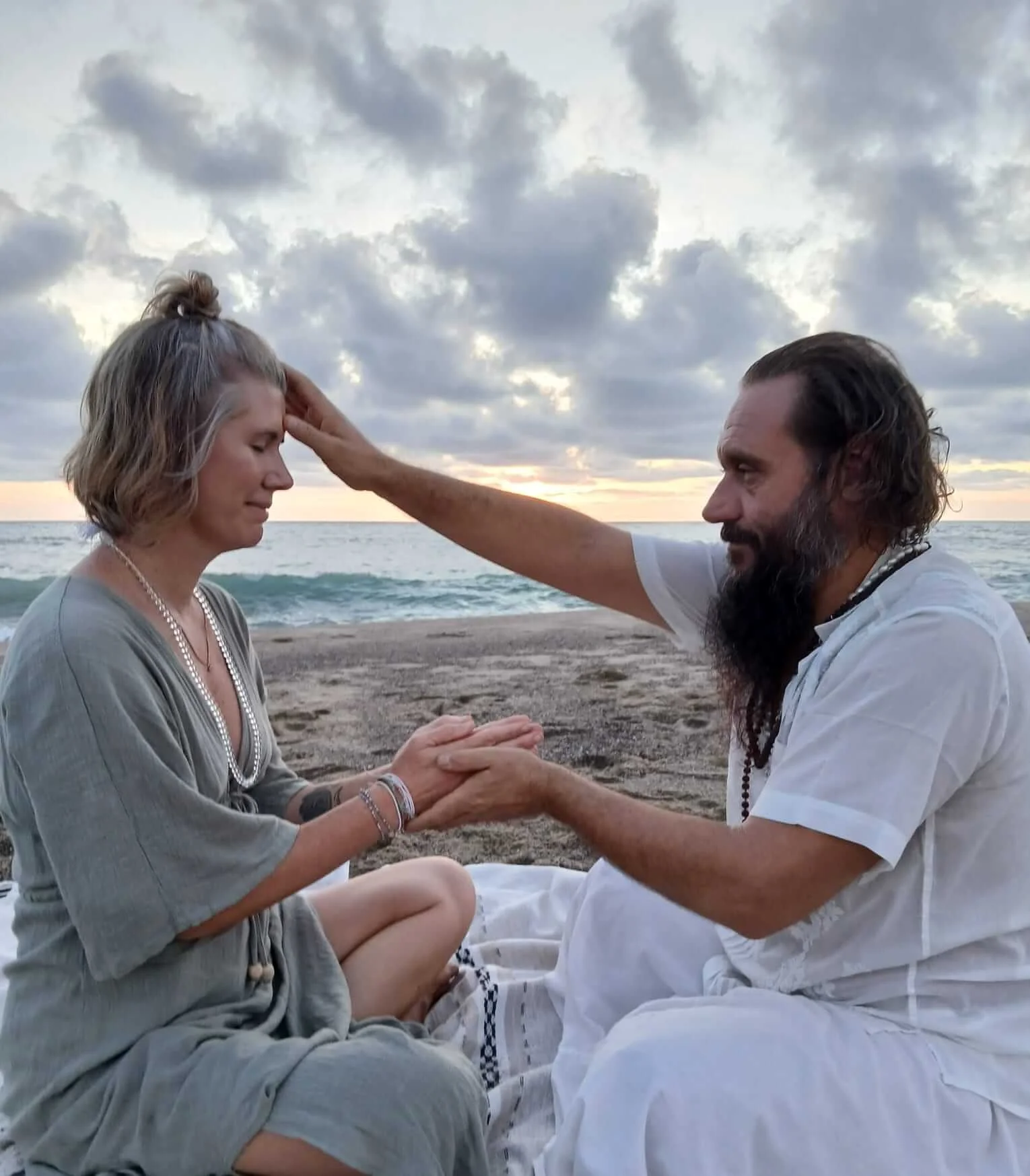
Nearly three years after leaving Colorado, Mexico no longer feels like an experiment—it feels like home. Having intentionally scaled back her consulting client load to create breathing room after years of nonstop hustle, Hannah is channeling that space into a new project exploring how our minds and bodies respond to change, helping others navigate life transitions as a fluid evolution rather than a rigid checklist. Meanwhile, her daughter—now in fourth grade—recently wrote and directed a Día de Muertos play for her school entirely in Spanish, a language she didn’t speak a word of three years ago. Even her once-reluctant husband has undergone his own unexpected transformation, becoming a certified Reiki master this past spring. Looking back, Hannah no longer measures her life by traditional definitions of success or fleeting happiness—instead, she’s found something steadier: fulfillment.
Hannah’s Tips for Wayfinders
Stop treating rest and movement as rewards: Traditional schooling and corporate culture condition us to stay still, grind through tasks, and treat basic human needs as prizes earned only after exhaustion. Build "life" directly into the middle of your workday rather than saving it for retirement.
Take the first step without the whole map: You rarely get clarity before you jump—and if you knew every obstacle ahead of time, you might talk yourself out of moving. Trust your gut when a path feels non-negotiable, take one concrete step toward it, and let the next step reveal itself.
Audit your self-imposed pressure: Leaving corporate doesn't automatically cure hustle culture. Notice when you are projecting external expectations onto yourself, and practice creating intentional boundaries—like an annual business shutdown—to uncouple your worth from constant busyness.
Choose fulfillment over fleeting metrics: Career success is vulnerable to market shifts, and happiness can vanish in a bad afternoon. Aim for fulfillment—a sustainable alignment between how you spend your days, who you are with, and what genuinely matters to you.
Reframe fear of friction: When a dream keeps resurfacing, ask yourself whether you are avoiding it simply because you don't feel worthy of the discomfort, awkwardness, or family friction it might cause. Either commit to walking toward it or consciously make peace with letting it go.
Follow Hannah
Operations & Startup Consulting: Learn more about Hannah’s human-centered operations and customer success strategy work for pre-seed to seed startups at Hannah Brotherton Consulting (hannahbrothertonconsulting.com).
Professional Updates & Candid Reflections: Connect with Hannah on LinkedIn—the only social platform she uses—for honest takes on scaling startups, remote work, and life after leaving the U.S.
