
Way Out #4: She Had Tenure, a Marriage, and a Child: It Was Slowly Killing Her with Dr. Risa Stein
How a Near-Death Wake-Up Call Turned a Psychologist into a Founder
Most of us are taught to be strong. Push through. Don’t complain. Be grateful for what we have.
Dr. Risa Stein did all of that.
By her mid-30s, she had everything she thought she was supposed to want: a PhD, a tenure-track career, marriage, a child, a house, and a car. She had neatly checked every box before age 30. From the outside, it looked like success.
On the inside, it was slowly killing her.
The Making of a High Achiever
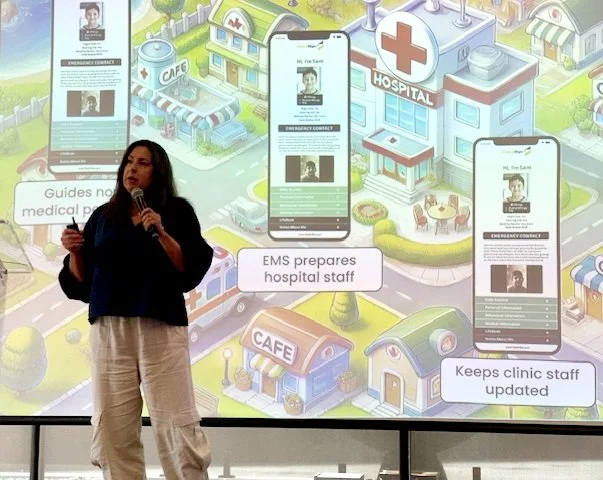
Risa grew up in New Jersey as the oldest of all her cousins. That status came with perks—she was doted on, deeply curious, and a little demanding
Her uncle, an experimental psychologist, would actually bring her into his primate lab at the university. While other kids were playing, she was watching him work with monkeys, fascinated by the science of behavior. To her six-year-old eyes, it looked like “the greatest job ever.”
The seed was planted instantly. From that moment on, she knew she was going to be a psychologist.
After thriving in a progressive school in Chicago, Risa landed in Stone Mountain, Georgia, in the early 1970s. She was a Jewish girl from New Jersey, suddenly transported into an environment that felt, in her words, “like the 1950s.”
Socially, she felt like an outsider, so she hardened. Academic achievement became her armor. She realized that if she could stand out by getting good grades, degrees, and titles, maybe she would belong. That coping strategy “worked” all the way through graduate school and into a 25-year career in clinical child and health psychology.
But it would come at a price.
When “Strength” Almost Killed Her
In 2012, the bill for that coping strategy came due.
Risa was preparing for a college tour with her son. The night before their flight out, she began hemorrhaging due to uterine fibroids. She stood up, passed out, and hit her head and elbow hard enough to leave a mark. The airline tickets were already paid for, and she told herself she’d be fine. Despite the health scare, they went anyway.

By the end of the trip, she wasn't just tired; she was in a wheelchair, with her son pushing her around campus because she couldn't walk more than 25 feet. When they finally returned home, her husband gasped when he saw her, saying she looked like she’d been through a year of chemotherapy.
Even then, the denial held. She went in for a blood draw and returned home to take a nap. The doctor called in a panic, telling her to get to the hospital right now. She had lost almost 60% of her red blood cells and was at imminent risk of organ damage.
Lying in a hospital bed, hooked up to transfusions, her doctor looked at her and said, “I don't know how you did it, how you're still alive”.
Her immediate, knee-jerk thought? “Yay me, I’m so strong.”
And then, the reality crashed down on her: That wasn’t strength. That was the dumbest thing she had ever done.
She realized she had been driving the rental car all week because her son wasn't old enough to drive it yet. She could have passed out at the wheel and killed them both or someone else on the road. She had put her life and her son’s safety at risk to keep being the reliable, invulnerable version of herself. That health crisis became her line in the sand.
Rewriting the Inner Script
Risa did what researchers do when they’re lost. She dug into the literature.
She looked for empirically grounded ways to navigate a midlife crisis—something beyond pop-psychology slogans. She didn’t find what she was looking for, so she built it. Drawing on her cognitive-behavioral background, she wrote The Best Damn Life Workbook to help people examine their beliefs around perfectionism, risk, and failure.
In writing that workbook, she was rewriting herself. She realized she had hit every milestone her career offered, and the result wasn't happiness. It was stifling. She needed to find something, anything, that would enliven her creative side. So, following the advice of a mentor who told her she had to "shake it up" if she wanted a different result, she began experimenting:
To find a new challenge: She started a "University Innovation Fellows" chapter, visiting Stanford and Google to learn design thinking—a world totally outside her psychology silo.
To start a real conversation: She launched "Active Minds" student groups to break the silence around mental health on campus.
To enliven her creative side: She began teaching classes on creativity, searching for the spark that had gone missing in her standard curriculum.
But no matter how many accolades she racked up, every time she walked into the classroom, it felt like “the air was sucked out.”
A turning point came in the form of a single email. She wrote to an astrophysicist she deeply admired, David Helfand at Columbia. She says she knew he had gone through something similar because he took a leave of absence at Columbia to start an experimental college in British Columbia, Canada. Her subject line was blunt: “Help. I’m suffocating here.”
He replied within minutes, validated her feelings, and told her this wouldn’t resolve itself unless she did something drastic. That conversation gave her the permission she needed to pivot.
From Academic to Entrepreneur
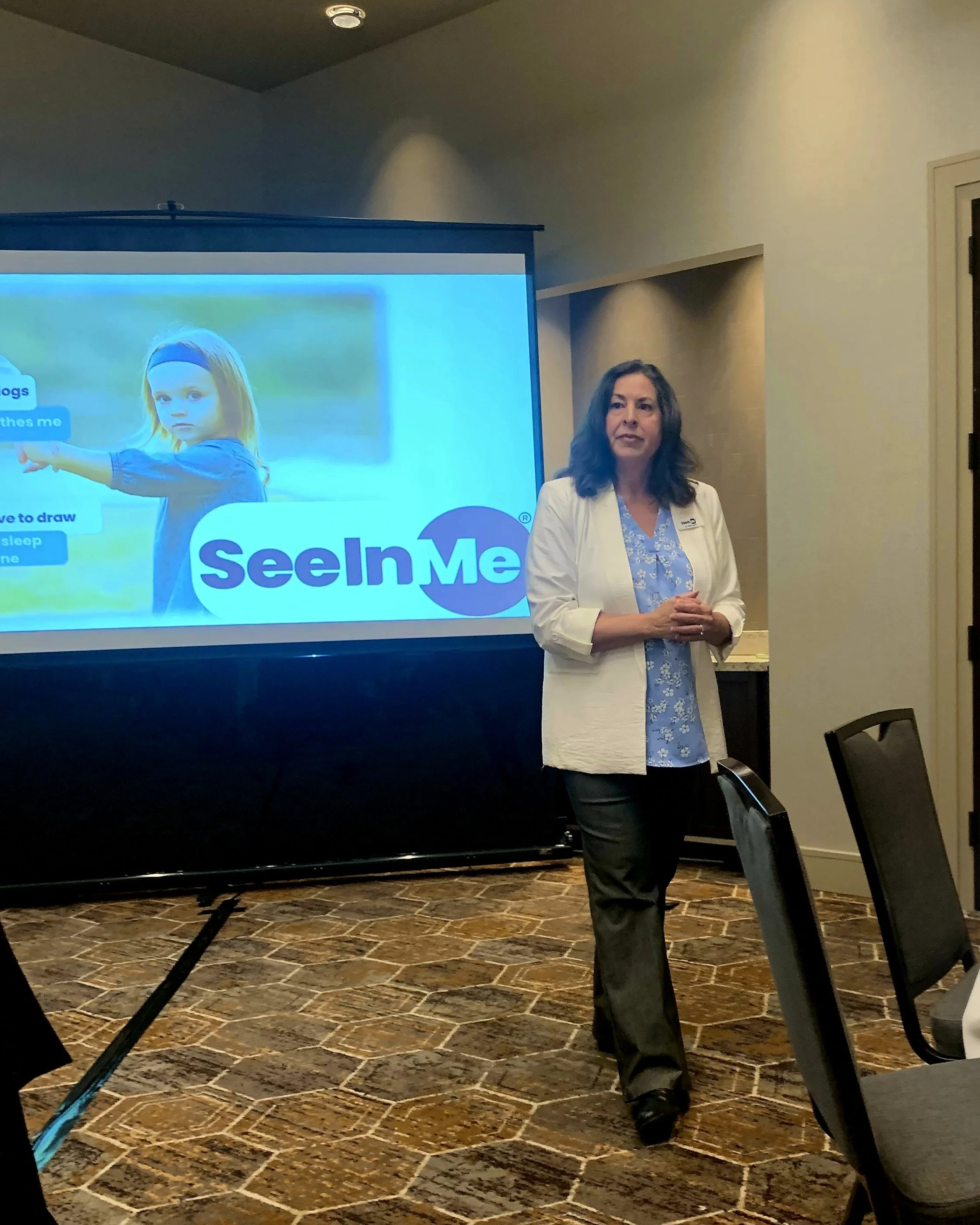
The shift into entrepreneurship didn’t come from a random business idea. It came from decades of lived experience struggling to make the healthcare system see the whole human.
Risa had spent years advocating for her son, Justin, who was diagnosed with Tourette syndrome, trying to get providers to see his strengths, not just his needs. She had also navigated dementia with her grandfather, watching how quickly people became “the diagnosis” instead of a person.
She began building SeeInMe—a HIPAA-compliant, holistic digital profile for people in complex care networks.
Instead of foster kids dragging around battered binders, or memory care residents being reduced to "dementia patients," SeeInMe allows care providers to access a digital “life book.” It puts the person back in the center of their care, capturing their culture, values, strengths, and voice.
Learning to Be Vulnerable in a New Arena
Leaving academia for startup life was an identity shift. Academia was a familiar container; startup life is chaos. Risa had to learn to bend without breaking:
To tolerate risk and the unknown.
To prioritize intrinsic motivation over external validation.
To see vulnerability as strength, not weakness.
She jokes that she once thought she was strong because she was invulnerable and intimidating. After nearly dying, she sees clearly that real resilience is the ability to be soft, to fail, to try again, and to keep aligning with what matters.
Risa’s Advice for Wayfinders
If you’re standing in that uncomfortable in-between where you have successful on paper but you’re suffocating inside, Risa’s story offers a few invitations:
Stop trusting the "plan on paper"
Risa advises that you should never expect a job or life plan to look as good in real life as it does on paper. If you want a specific role (like a Chief People Officer), go talk to people who are actually doing that job already. Ask them about the upsides and downsides to see if it actually fits you, rather than just relying on the job description.Run "Small Experiments"
Instead of trying to pivot your whole life at once, Risa suggests taking "small steps" like you would when creating a product. Test and iterate. Try a small version of your interest (a class, a side project) to see if it fits. If it doesn't work, treat that as data to iterate and pivot. Nothing is irreparable.Diversify your identity
Risa warns that defining yourself only by your career (as she did with academia) leaves you with very little latitude if things go wrong, making your life a "house of cards". Develop as a "full-fledged human." Intentionally invest time in facets of your being outside of work so that your identity isn't fragile.Send the "Help" email
When Risa felt like the "air was sucked out" of the room, she didn't try to think her way out of it alone. She emailed an astrophysicist she admired with the subject line: "Help! I'm suffocating here".
Find a mentor by identifying someone who has navigated the transition you’re facing and reach out. Be vulnerable enough to admit you are stuck. People are often surprisingly willing to help.Launch before you have the map
Risa used to wait until she had the entire path mapped out from "point A to point Z" before doing anything. Now, she finds it liberating to launch before she is ready. Her advice: Show your "baby" early. Put your work or idea in front of people and ask, "What do you think?" Focus on intrinsic motivation (doing it because it matters to you) rather than waiting for external validation or a guarantee of success.
Follow Risa
You don’t have to wait for a health crisis to make a change. You can begin by asking: What part of my life is built around someone else’s definition of success? And what would it look like to honor my own?
Then, take one small, imperfect step in that direction.
This post is part of the 101 Ways Out series: stories of people who found the courage to exit the status quo and build a life of purpose, freedom, and joy.
