
Way Out #28: From a Toxic Marriage to Freedom with Mary Sinclair Kowalski
I have known Mary Sinclair Kowalski for almost my entire life. She is a family friend, and the best friend of my cousin David, who has always been a huge source of light and inspiration in my own life. Growing up, I watched their beautiful, fun-loving friendship, but I only knew a fraction of what Mary was actually carrying beneath her warm, bright exterior.

When Mary and I sat down for this conversation, I was deeply moved by her vulnerability. Today, Mary is a flight attendant with American Airlines, traveling the world, dog-mushing in Norway in the dead of winter, and living a life completely on her own terms. But her path to this ultimate state of freedom was forged through some of the darkest, most oppressive trials a person can face.
Her journey is a masterclass in breaking free from control, surviving literal and psychological spin-outs, and discovering that the most rebellious thing you can do in a world obsessed with outward perfection is to choose your own joy.
Perfectionism and Parental Expectations

Mary grew up in a world of extreme, conflicting pressures. Her father was a strict military man, highly critical and demanding, while her mother was a super-hippie. Naturally, they divorced early, leaving Mary to navigate a chaotic childhood of split expectations.
For a few formative years between the ages of 12 and 16, Mary lived on a military base in what she calls a bubble of "tropical Panama bliss." It was a beautiful equalizer. In Panama, there was no pressure to fit in; it stormed every afternoon, so nobody wore makeup or styled their hair. They just ran outside and had fun.
But when she moved back to Texas in the 1980s, she hit a wall of culture shock. Suddenly, girls were wearing high heels, pantyhose, and sporting big, hair-sprayed hair to high school. As a natural-born people-pleaser, Mary internalized the pressure to perform and adapt.
The weight of expectations followed her everywhere. She remembered being in fourth grade and her dad looking at her report card to ask, "Why an A-minus?" Meanwhile, her well-meaning mother filled out a magazine questionnaire predicting her elementary-school daughter would go "postdoctoral."
She was a smart kid, struggling with then-unrecognized ADHD, always eager to please, and constantly striving for an impossible standard of perfection.
The Golden Cage of a Control-Driven Marriage
At 23, Mary made what she thought was a logical, safe decision: she married her high school best friend. Though she wasn't wildly in love, she took her marriage vows seriously. She was determined to make it work, remaining in the relationship for 17 years.
To the outside world, they had achieved the American Dream. Her husband climbed the ranks to become an executive at Microsoft, earning a large income. They vacationed at top-tier Disney resorts where giraffes literally grazed outside their bedroom windows.
But inside the house, the atmosphere was dark, tense, and suffocating.
After earning her bachelor's degree in psychology, Mary started her career as a special education teacher, working with children who had what was then classified as emotional disturbances and behavioral disorders. While the work was incredibly draining and difficult, she found it deeply rewarding whenever she managed to make a real difference in a child's life.
But her transition into motherhood soon became her primary focus. When Mary became pregnant, her new baby, Garrett, instantly became the center of her being, and she loved dedicating herself entirely to helping him have the best possible life. She had originally planned to pursue a master's degree in educational studies, but when her "wonderful genius baby" taught himself to read before kindergarten, she gladly made the organic choice to put those plans on hold and step into the role of a full-time, homeschooling mom. "Life happens, you go with it," she explains. She spent those early years pouring her heart into Garrett and protecting his sweet disposition.
Yet, as the years passed, her deeper, lifelong dream of returning to school to become a therapist remained firmly out of reach—not because of her dedication to her son, but because of the suffocating dynamics within her marriage. Whenever Mary expressed a desire to expand her education and transition into counseling, she met a brick wall. Her husband did not want her to be more educated than he was, and he actively blocked her from pursuing her Master's degree. It was a control that was both emotional and absurdly granular. In our conversation, Mary shared a bizarre but telling detail: she was strictly forbidden from ever letting a neighbor borrow their carpet shampooer.
Like the classic analogy of a frog in boiling water, the temperature was turned up so slowly that Mary didn't realize how much of her own identity she had lost. The constant barrage of messages telling her she was crazy, stupid, and a failure had slowly eroded her self-worth until she forgot who she actually was.
Mama Bear Awakening and Choosing Poverty
For years, Mary had tolerated abuse directed at herself, but the second she saw her husband's behavior turn toward her little boy, her protective "mama bear" instinct took over. She didn't hesitate. She called the police, had them escort him out of the home, and made the decision to completely cut him out of her own life. While she fiercely protected her child, she carefully chose not to draw Garrett into an emotional tug-of-war with his dad, allowing her son to navigate his own relationship with him as he grew up.
It was a terrifying, high-stakes exit. Because her husband held all the financial cards, choosing freedom meant choosing a life of temporary poverty. She walked away from the Microsoft wealth, the top-tier vacations, and the financial security because she knew that protecting her child's spirit and her own sanity was worth more than any bank account.
The first thing Mary did after breaking free was put herself back in school. It took five grueling years of juggling motherhood and intense study, but she earned her Master's degree in counseling. During those five years, she spent three intensive years working inside schools completing her clinical practicums and school counseling internships, directly counseling children in deep need. When she took her GRE to get into the program and saw her incredibly high scores, she had a quiet, shocking realization: Wow, I’m actually smart. The psychological abuse had run so deep that she had literally forgotten her own intellect.
The 'Yes-Man' and the Stepdad Who Stepped Up
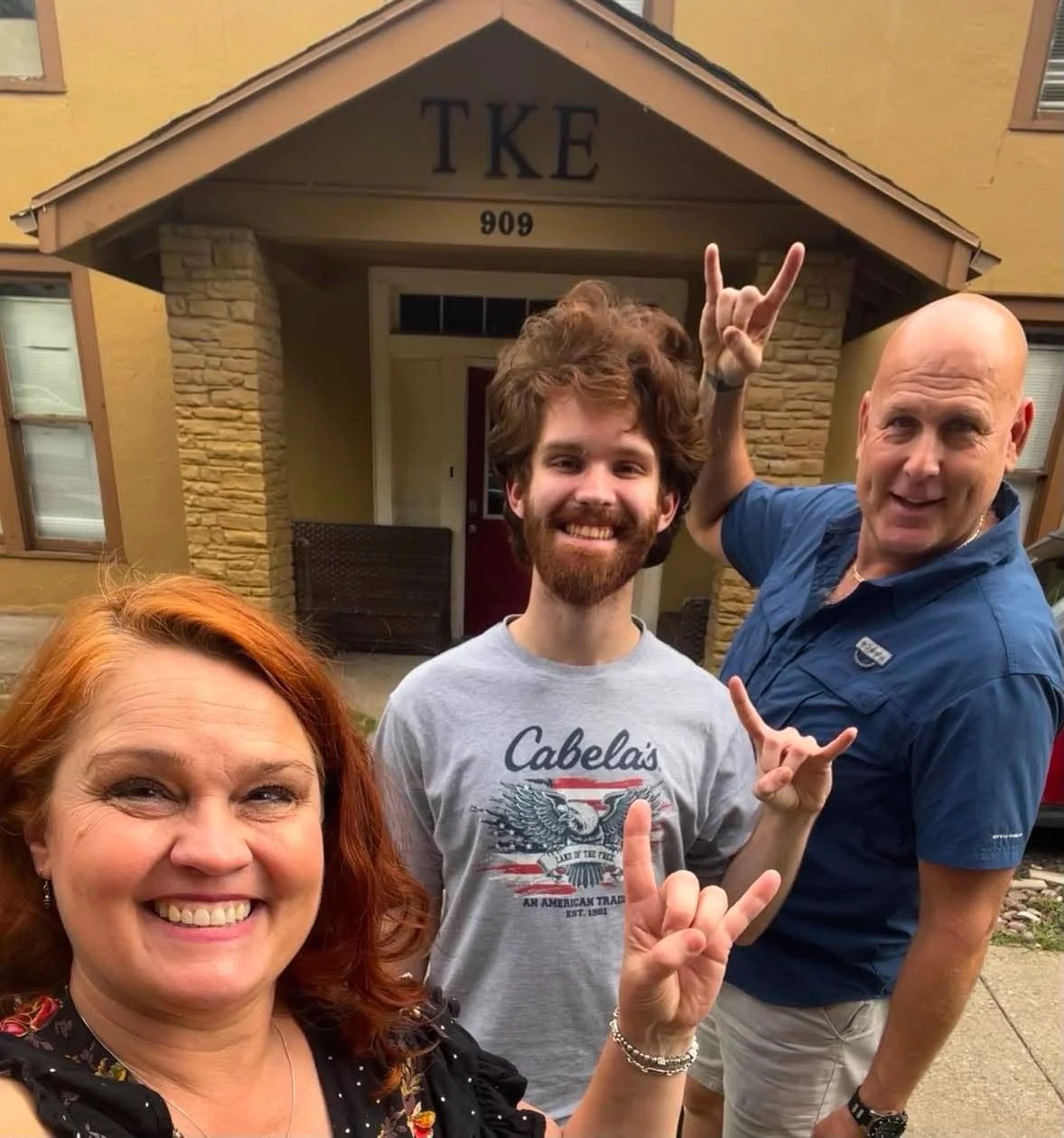
As Mary navigated her healing, she found the true love of her life: her current husband, Paul. They celebrated their 10th anniversary this past February, and their partnership is the antithesis of the control and darkness of her first marriage.
When Paul first stepped into her life, Garrett was still a little boy, around seven or eight years old. Paul didn't just love Mary; he loved her son, too. He stepped up as a stepfather, teaching Garrett how to shave, drive, and be a true gentleman who knows how to treat women.
But their love story is also one of mutual empowerment and professional risk-taking.
Paul was once a highly successful medical supply salesman, pulling in a great salary but secretly miserable. Because he is an introvert, the constant outward hustle of corporate sales was draining his soul. Mary, who describes herself as the kind of "yes-man" friend you want to invite to dinner because she’ll always enthusiastically tell you to order dessert, looked at him and said, "If you hate your job, maybe don’t do that job anymore. Take a chance and go off on your own."
It was a massive gamble, but Paul took her advice, left his corporate job, and launched his own remodeling business. Today, he is self-employed, highly respected, and very happy.
Their easygoing, supportive dynamic became her ultimate anchor. They are the kind of couple that even survived the tight quarters of the COVID-19 lockdown, just getting along and enjoying each other’s company because Paul is simply "easygoing and fun and nice."
The Death Tollway and Black Ice
After graduation, Mary was weighing whether to accept a school counseling job or follow her heart and become a flight attendant—a transition that would mean taking a $30,000 pay cut. Paul turned out to be her ultimate cheerleader. He jokingly said, "Well, you'd probably spend that extra money on travel anyway, so why not just do it?"
With Paul in her corner, Mary was ready to take that whimsical leap. It all started when her best friend, David, posted on Facebook that American Airlines was hiring flight attendants. On a complete whim, Mary submitted an application. Because she didn't feel desperate for the job, her total lack of nervousness read as pure, magnetic confidence during her interviews. She was hired on the spot.
But the reality of a new airline career can be a brutal shock. The physical grind of commuting on 'reserve status'—which basically meant having zero control over her schedule, with no idea where they were going to send her, when, what airplane she would be on, or what position she would fly—was exhausting. As Mary explains, it is a very hard way to try to live your life."
Mary was driving to Dallas to be on reserve during an unexpected winter storm. Since Texas roads and cars aren't built for ice, she had called Paul—who was born and raised in Chicago—to ask for driving tips. He told her: "Go slow, keep both hands on the wheel."
But that advice only goes so far when you hit black ice. Driving Paul's heavy truck (which they had chosen for safety over her Volkswagen Beetle), Mary hit a patch of ice on a bridge and spun violently in the pre-dawn darkness, smashing into the barriers on both sides of the highway.
As loose items flew around the cab of the truck, Mary had a profoundly calm, logical conversation with herself. Okay, I am about to die, she thought. Garrett will be okay, he's almost done with college. Paul will be sad, but he’ll make it. This is going to hurt, but it will be over quickly.
She felt no panic. She felt only a deep, quiet peace.
When the truck finally crunched to a halt, Mary realized she was alive. She had escaped with nothing but a severe seatbelt bruise. But when the state trooper arrived and called the stretch of highway "the death tollway," and her airline employer treated her as a replaceable schedule slot, a massive shift occurred in her soul.
She realized three things:
She was never going to take crap from a job, a passenger, or anyone else ever again.
She was going to live every single moment like it might be her last.
She was going to drown the people she loved with love.

Once the chaos settled and she finally made it to a little motel in Tyler, Texas, with nothing but her phone, lacking even a charger or her purse, the very first thing she did was call her best friend David. She excitedly told him: 'Listen, this wonderful thing happened. I have totaled Paul's truck, I am not injured, and I am in this motel!'
She told David something he’d been hoping to hear for a long time: in that moment, she decided she was going to transfer her base from Dallas to New York.
David, hearing her bizarrely calm, almost joyful tone, immediately replied: 'Honey, you're in shock. You're going to be incredibly upset when this all sinks in.'
Yet years later, Mary has never felt a single moment of sadness or regret about that day. She still looks back at that terrifying crash on the bridge as one of the most clarifying blessings of her life.
Here is one of my favorite reflections that she shared:
“When you begin to get old, you can either be afraid and stay at home all the time, or you can be that crazy grandma that's like jumping out of planes and stuff. I just want to be a little closer to that end. I thought, I cannot right now, when I'm still young and vigorous, start letting fear contain me. So even though I'm scared to death to transfer and be based in New York, I'm going to do it and it’s been the best decision ever, because now I get to work flights with my best friend, and now I get to do some international stuff here and there. And by no means do I feel like a New Yorker, but sometimes I try it on and pretend.”
Letting the River Take Her
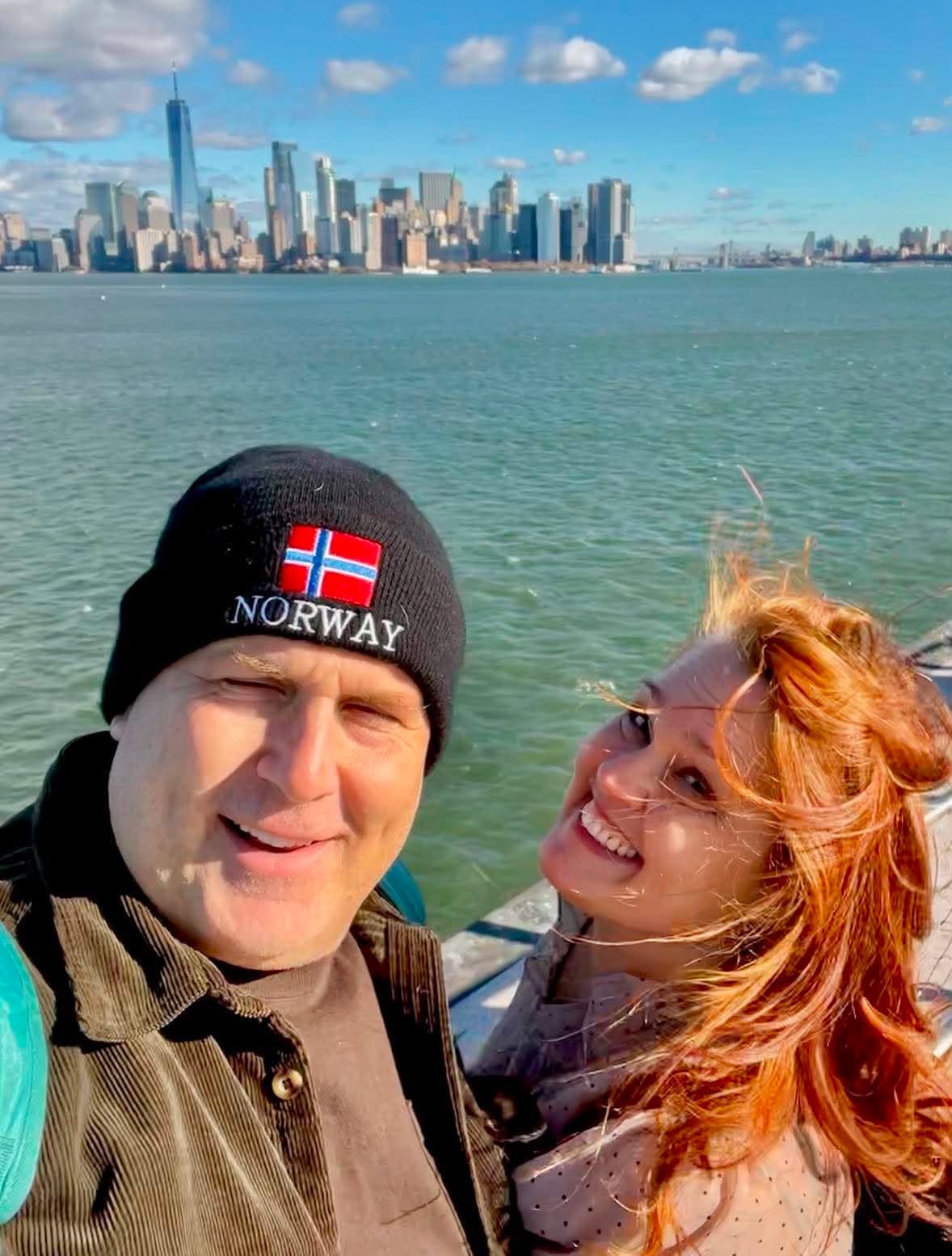
Today, Mary has been happily married to Paul for ten years. But her choice to remain in the aircraft cabin rather than being a therapist is something that still puzzles outsiders.
People frequently ask her, "Aren't you sad that you're wasting your education?"
To Mary, that question is not only a little rude, but it completely misses the point of what a well-lived life actually looks like. "How is any learning ever wasted?" she counters. She earned every single minute of that hard-won Master’s degree, and she is incredibly proud of it. But her psychological training actually led her to where she was always meant to be.
The reality is that working as a special education teacher and counseling children in deep need was taking an unspoken, devastating toll on Mary's heart. To do that work well, you have to care immensely—but to survive it, you have to find a way to detach. Mary found that she simply couldn't leave the pain behind. When you love children, seeing them sad, depressed, anxious, abused, or self-harming is a heavy cargo to carry. She brought that emotional darkness home with her night after night, and it was draining her soul.
In contrast, being a flight attendant is a different kind of rewarding. Mary cares deeply about her passengers, keeping them safe and comfortable. But the second she clocks out, she leaves it all on the plane. She doesn't carry their burdens home in her heart.
Furthermore, her ADHD brain simply wasn't built for a nine-to-five cubicle routine, seeing the same people in the same place day after day. She thrives in the open skies, surrounded by changing scenery and the beautiful unpredictability of travel.
Most importantly, Mary has completely let go of the desire for external validation. She no longer needs to impress people with the "saintly" status of being a special ed teacher or a therapist just to feel like a good person. She has traded the exhausting, rigid world of overachievement and societal expectations for a life of simple, indulgent delights—like dog-mushing in Norway in the dead of winter, or enjoying quiet lakefront mornings in Chicago.
She has traded survival for joy, and she refuses to let anyone else dictate the rules of her life. Even her toxic first marriage was worth it, because it gave her her brilliant son, Garrett.
"If I force my focus over to love," Mary told me at the end of our chat, "it just always wins."
Mary's Tips for Wayfinders
You can't skirt the pain:
Growth and healing require you to go directly through the unpleasantness, not around it. Just like healing a physical injury, things often have to get uncomfortable before they can get better. Stop fighting the reality of where you are, accept life on life's terms, and let the healing begin.Hear the underlying need, not the words:
When dealing with difficult, angry, or toxic people, practice the discipline of "dropping the rope." When they lash out, don't focus on their hurtful words. Instead, translate it in your mind as: "Blah, blah, blah, I want to hurt you because I am hurting" or "Blah, blah, blah, I need to win." Once you realize it isn't about you, you can offer sincere compassion without letting them rob you of your peace.The 14-Day Prayer for Forgiveness:
Forgiveness isn't for the other person; it’s a gift of freedom for yourself. If you are struggling to let go of a deep grudge against someone who hurt you, spend two weeks praying every single day for that person to receive every beautiful, positive thing you want for your own life. It sounds impossible, but by the end of those two weeks, you will find that the poison has left your own system.
Follow Mary
Want to follow Mary’s international adventures and daily doses of joy? Connect with her on social media:
Instagram:@slugbugmary
Facebook: Mary Sinclair Kowalski
